Searching for the Best Camping Hammock that delivers comfort, durability, and easy setup for outdoor adventures? Understanding the challenge of finding reliable hammocks that won’t let you down during camping trips, hiking expeditions, or backyard relaxation is essential. This comprehensive guide showcases top-rated camping hammocks that combine lightweight portability with impressive weight capacity, transforming outdoor experiences without complicated installation processes. Tired of hammocks that tear easily, provide uncomfortable sleeping positions, or take forever to set up? These expert recommendations feature only the finest camping hammocks that maintain their quality through countless adventures. Ready to elevate outdoor relaxation with the perfect blend of comfort and practical functionality? Let’s explore these exceptional options that bring together trail-ready performance with genuine comfort.
Contents
5. Eno DoubleNest Hammock

The ENO DoubleNest Hammock stands out as an exceptional choice for outdoor enthusiasts seeking reliable comfort without sacrificing portability. Weighing just 19 ounces, this lightweight hammock easily fits into hiking packs without adding burdensome weight, making it ideal for backpackers who need to minimize their load. The compact design ensures it won’t consume precious space that could be used for other essential camping gear, allowing adventurers to pack efficiently for extended trips.
Measuring 9.5 feet in length with an impressive 400-pound capacity, this double hammock comfortably accommodates two people or provides generous space for solo relaxation. The versatility makes it perfect camping gear for both men and women, whether enjoying a peaceful afternoon at the beach, attending outdoor festivals, or settling in for the night at a remote campsite. The generous dimensions ensure users never feel cramped or restricted while lounging or sleeping.
Setup couldn’t be more straightforward with this outdoor-ready camping gear. The hammock seamlessly integrates with all ENO hammock straps and accessories, creating a customizable system that adapts to various environments and tree configurations. This compatibility eliminates the frustration of purchasing incompatible gear and allows users to expand their setup as needs evolve. The durable construction features triple-stitched seams combined with breathable nylon material, ensuring the hammock withstands regular use without developing tears or weak points that plague lower-quality alternatives.
ENO’s commitment to environmental responsibility shines through their tree-friendly design philosophy. The company prioritizes designing responsibly made products that benefit both people and the planet, ensuring outdoor enthusiasts can enjoy nature without causing damage to the trees that support their relaxation. This thoughtful approach to manufacturing demonstrates that quality outdoor gear can coexist with environmental stewardship, making every camping trip more sustainable.
4. Gorilla Grip Camping Hammock
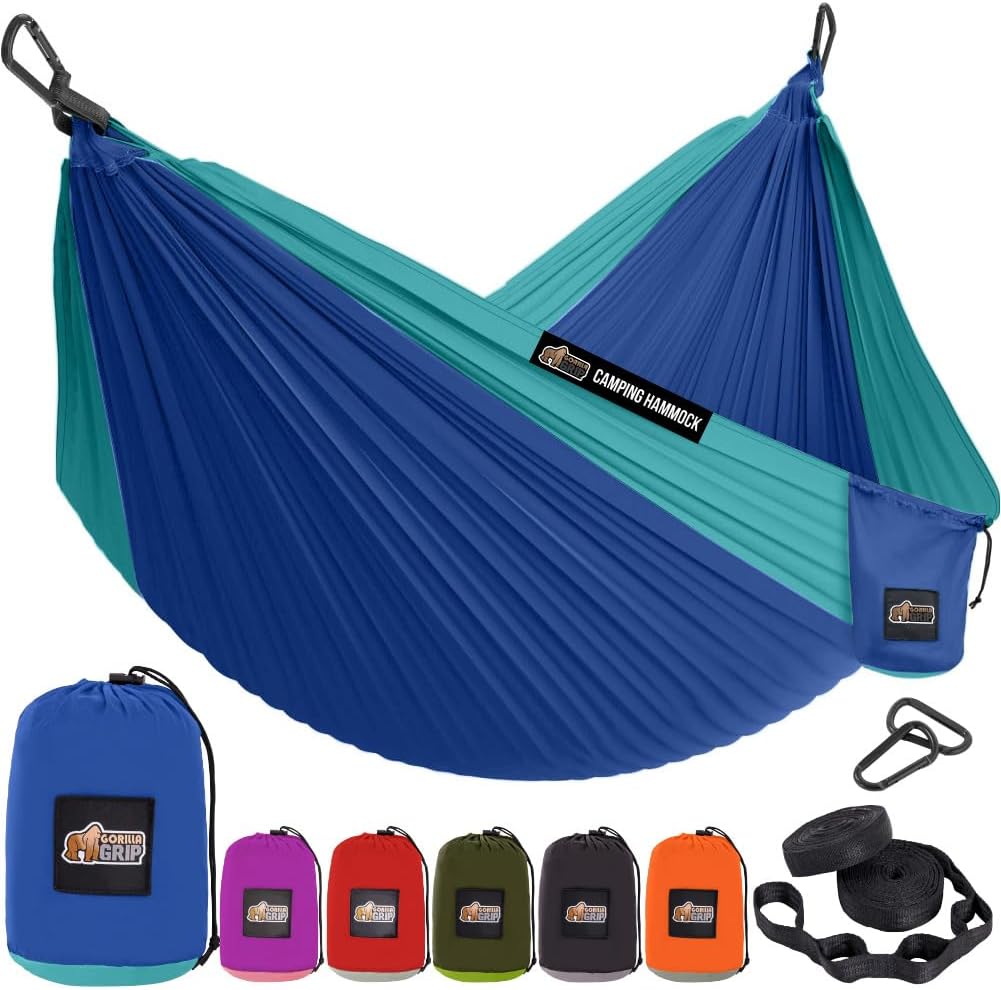
Built for serious durability, the Gorilla Grip Camping Hammock delivers exceptional strength that outdoor adventurers can genuinely trust. The ultra-strong construction features steel carabiners capable of withstanding an impressive 1000-pound pull force, combined with heavy-duty seams and straps that ensure long-lasting performance. This single hammock comfortably supports one person up to 400 pounds maximum weight, providing peace of mind for users who need reliable equipment that won’t fail during critical moments in the wilderness.
The included installation system eliminates common setup frustrations through thoughtful engineering. Two steel carabiners and two adjustable 10-foot straps enable secure installation on various tree sizes, accommodating different camping environments from dense forests to sparse woodland areas. Each adjustable strap features 18 loops that allow precise height adjustments, ensuring users achieve the perfect hanging position regardless of tree spacing or diameter. This stay-in-place design prevents the annoying slippage that cheaper hammocks suffer from, maintaining the ideal position throughout the night.
Comfort meets practicality in the breathable nylon material that remains soft against the skin during extended use. The fabric resists dirt accumulation while drying quickly after exposure to morning dew or unexpected rain showers, maintaining long-lasting durability regardless of how demanding the adventure becomes. This quick-drying property proves particularly valuable during multi-day trips where damp gear can become a serious comfort issue.
Portability defines this hammock’s appeal for on-the-go adventurers. The compact design folds into an attached pocket for convenient storage, transforming into a remarkably small package that fits easily into backpacks or travel bags. This integrated pocket serves double duty by providing space for holding small items like headphones, sunglasses, phones, or keys during relaxation. Weighing only 1.76 pounds, the lightweight construction makes transport effortless, never becoming a burden during long hikes to remote camping destinations.
3. Covacure Camping Hammock

The Covacure Camping Hammock redefines durability standards with construction that serious outdoor enthusiasts can depend on during challenging adventures. Crafted from high-quality 210T parachute nylon material, this tear-resistant, breathable, and quick-drying hammock supports an astounding 772 pounds of weight. The foundation rests on two durable aluminum sand pegs combined with ultra-strong nylon straps featuring six adjustable loops, creating a system robust enough for entire families to enjoy natural scenery together without safety concerns.
Generous dimensions make this camping hammock incredibly versatile for different user preferences. Measuring 9.5 feet long by 4.6 feet wide (114.2 inches by 55 inches), the spacious design offers ample room for one person to stretch out completely and comfortably, or creates a cozy spot where two adults can relax together. This flexibility ensures the hammock adapts to various situations, from solo contemplation to romantic sunset viewing or parent-child bonding time in nature.
Portability remains a cornerstone feature despite the hammock’s impressive size and strength. Weighing merely 1.93 pounds, this parachute hammock proves perfect for camping, hiking, backpacking, travel, emergency survival situations, and countless other adventures. The lightweight construction never becomes a burden during long treks, while the setup process takes just a few minutes from start to finish. The hammock packs away into a conveniently small integrated stuff sack that anyone can manage, regardless of camping experience level.
The convenient mosquito net feature elevates this hammock beyond basic competitors. Constructed from durable material with appropriately sized holes, the net provides excellent protection against bugs without compromising airflow or visibility. The ingenious single-rope setup system means users don’t waste valuable time installing separate netting components. When the net isn’t needed, simply securing the hook in the designated hole stores it out of the way. The inner bag serves as practical storage for small items like phones, snacks, or camping accessories, keeping essentials within easy reach throughout relaxation sessions.
2. Sunyear Camping Hammock

The Sunyear Camping Hammock represents a true camping solution where outdoor enthusiasts can actually achieve restful sleep in natural environments. This compact and lightweight outdoor hammock arrives in an elegant pouch containing all necessary installation tools, eliminating the common frustration of discovering missing components at the campsite. The complete package makes it ideal for solo adventures, camping trips, hiking expeditions, backpacking journeys, travel experiences, and emergency situations where reliable shelter proves essential.
Comprehensive installation tools distinguish this hammock from competitors who force customers to purchase additional equipment. The package includes two easy-setup hammock straps featuring 32 adjustment loops combined with 20 feet of total length, providing exceptional flexibility for various tree configurations. Single hammock versions include two solid steel D-shape carabiners, while double hammock options feature two 12 KN ultralight yet heavy-duty carabiners. Two net ropes complete the package, representing more than $22 in value compared to purchasing these items separately on Amazon. This completeness saves both time and money while ensuring adventurers possess everything needed for immediate setup upon arrival at camping destinations.
For those who love wilderness adventures, camping, and backpacking, this heavy-duty hammock with integrated netting provides the perfect answer to outdoor sleeping challenges. The design functions as a large sleeping hammock bed, offering a best-in-class gift idea for camping enthusiasts. The versatility shines through the ability to flip the hammock over and instantly convert it into a relaxing tree hammock within seconds, adapting to different usage scenarios throughout the day.
Quality construction meets exceptional endurance through carefully selected materials. The hammock utilizes high-quality 210T parachute nylon material—the same type skydivers and premium hammock manufacturers rely on for life-critical applications. The specially designed durable net fabric features twice the density compared to similar products flooding the market, providing superior protection against insects while maintaining excellent visibility and airflow. This lightweight portable hammock design accommodates even the most demanding camping requirements without compromise, ensuring years of reliable service across countless adventures.
1. Wise Owl Outfitters Camping Hammock

Comfort reaches new heights with the Wise Owl Outfitters Camping Hammock, designed to provide exceptional relaxation across diverse outdoor scenarios. Whether settling in by the campfire, sleeping beneath countless stars during winter camping seasons, or simply lounging around, this camping hammock delivers everything needed to stay comfortable and covered throughout the night. The versatility extends from camping and hiking adventures to beach trips and even casual backyard patio relaxation on hammock stands, adapting seamlessly to wherever adventure calls.
The remarkably compact design defies expectations for such a comfortable hammock. Weighing only 24 ounces, this portable hammock folds down to approximately the size of an eggplant, making it incredibly easy to transport without consuming valuable pack space. Single hammock dimensions measure 9 feet long by 4.5 feet wide, perfectly sized for one person, while the double hammock extends to 10 feet long by 6.5 feet wide, comfortably accommodating two people or anyone desiring extra personal space. The small packed size allows adventurers to simply throw it in their backpack and go, never worrying about weight or bulk limitations.
Setup simplicity eliminates the technical challenges that frustrate many camping gear users. Equipped with two 9-foot-long tree straps and carabiners, these hammocks make installation an absolute breeze regardless of camping experience level. The straps feature five separate loops enabling precise height adjustments to achieve the perfect hanging position for individual preferences. The single hammock safely holds up to 400 pounds, while the double hammock impressively supports up to 500 pounds, providing substantial weight capacity that accommodates various body types and usage scenarios.
Premium quality construction ensures this investment delivers a lifetime of outdoor enjoyment. The camping hammocks utilize soft yet remarkably strong parachute nylon combined with triple interlocking stitching that prevents tears and maintains structural integrity through years of regular use. Strong carabiners and tree-friendly hammock straps complete the package, protecting both users and the natural environment. Machine washability adds convenient maintenance—simply remove carabiners first to protect the washing machine, add minimal soap, wash on the gentle cycle with cold water by itself, then hang to dry rather than using a dryer. This easy care routine keeps the hammock fresh and clean without requiring special treatments or professional cleaning services.
The perfect camping gift for any occasion, this hammock represents essential camping gear for adventurers at any skill level. Whether celebrating birthdays, holidays, or simply showing appreciation for the outdoor enthusiast in someone’s life, this camping hammock proves to be a must-have item that genuinely enhances upcoming camping trips and outdoor adventures for years to come.
The Ultimate Guide to Camping Hammocks: Comfort, Portability, and Adventure-Ready Design
Camping hammocks have revolutionized outdoor sleeping and relaxation, offering a lightweight alternative to traditional tents while providing unmatched comfort suspended above ground. Beyond eliminating concerns about rocky terrain or muddy ground conditions, quality camping hammocks deliver a peaceful sleeping experience that connects adventurers more intimately with nature. With countless options available—from ultralight backpacking models to spacious two-person designs—selecting the perfect hammock requires understanding key features, materials, and intended uses. This comprehensive guide explores everything essential about camping hammocks, helping outdoor enthusiasts navigate options to find ideal matches for their adventure styles and comfort preferences.
Understanding Different Types of Camping Hammocks
Not all camping hammocks serve the same purposes or offer identical features. Recognizing the distinct characteristics of each type ensures investments meet specific outdoor needs.
Single Camping Hammocks
Single hammocks prioritize lightweight design and compact packing for solo adventurers who value minimizing pack weight. Typically measuring 9-9.5 feet long by 4.5-5 feet wide, these hammocks provide comfortable space for one person while weighing as little as 16-24 ounces. The reduced dimensions translate to faster setup times and smaller packed sizes, making them ideal for backpackers covering long distances or ultralight enthusiasts who scrutinize every ounce. Weight capacities generally range from 300-400 pounds, offering substantial safety margins for most users. Single hammocks excel during solo hiking trips, minimalist camping adventures, or situations where pack space and weight represent critical concerns.
Double Camping Hammocks
Double hammocks expand dimensions to approximately 10 feet long by 6-6.5 feet wide, creating generous space for two people or providing extra room for solo users who prefer more spreading space. While weighing slightly more at 18-28 ounces, the additional comfort often justifies the modest weight increase for many campers. The broader width eliminates the cocooning effect some people dislike about narrower hammocks, allowing more natural sleeping positions. Weight capacities typically reach 400-500 pounds, accommodating couples or users with additional gear. Double hammocks suit car camping, base camp setups, backyard relaxation, or any scenario where the slight weight penalty doesn’t create significant disadvantages.
Hammocks with Integrated Bug Nets
For camping in mosquito-prone regions or during summer months when insects become problematic, hammocks with integrated bug netting provide essential protection without requiring separate components. These designs incorporate mesh netting that deploys above the hammock, creating a complete enclosure that keeps insects out while maintaining visibility and airflow. The integrated approach ensures the netting stays properly positioned throughout the night, unlike separate bug nets that can shift or collapse. Quick-setup systems allow users to secure the netting with single ropes, while storage mechanisms keep the mesh out of the way when not needed. The additional netting adds minimal weight—typically 4-8 ounces—making these hammocks worthwhile investments for areas where bug pressure makes sleeping difficult.
Essential Benefits of Choosing Camping Hammocks
Superior Comfort on Uneven Terrain
Camping hammocks eliminate the primary frustration of ground-based sleeping: finding level, comfortable terrain free from rocks, roots, and slopes. The suspended design conforms to body contours naturally, distributing weight evenly without creating pressure points that lead to discomfort during the night. Unlike sleeping pads that can deflate or shift on uneven ground, hammocks maintain consistent comfort regardless of terrain below them. This advantage proves particularly valuable in mountainous regions, rocky areas, or densely forested locations where finding suitable tent sites becomes challenging. The gentle swaying motion many people find soothing often leads to falling asleep faster and sleeping more deeply than on rigid ground surfaces.
Lightweight Portability for Extended Trips
Modern camping hammocks achieve remarkable weight savings compared to traditional tent systems. A complete hammock setup including straps, carabiners, and rain fly typically weighs 1.5-3 pounds—significantly less than most backpacking tents. This weight reduction becomes increasingly important during multi-day trips where every ounce affects comfort and endurance. The compact packed size allows hammocks to fit into small spaces within backpacks, leaving room for other essential gear. For thru-hikers covering hundreds or thousands of miles, the cumulative benefit of carrying less weight dramatically reduces fatigue and allows longer daily mileage. Even casual campers appreciate the ease of transporting hammocks compared to bulky tent packages.
Rapid Setup and Breakdown
Experienced hammock users can complete full setup in under five minutes, even in challenging conditions or after dark. The simple process involves locating suitable trees, attaching straps, clipping carabiners, and adjusting height—no complex pole systems, stake positioning, or rain fly adjustments required. This speed advantage proves valuable during afternoon thunderstorms, late arrivals at campsites, or situations where quickly establishing shelter becomes necessary. Morning breakdown proceeds equally fast, allowing earlier departures for day hiking or continuing to the next camping location. The time savings accumulate significantly over multi-day trips, providing more time for exploring, relaxing, or covering distance.
Critical Factors to Consider Before Purchasing
Weight Capacity and Safety Margins
Weight capacity ratings represent maximum loads hammocks can theoretically support, but smart buyers prioritize substantial safety margins beyond their actual weight. A 200-pound person should target hammocks rated for at least 300-400 pounds to ensure comfortable, safe use that doesn’t stress materials near their limits. Higher capacity ratings generally indicate stronger fabrics, reinforced stitching, and more robust attachment points that contribute to longer service lives. Consider total weight including body weight, sleeping bags, pads, and any other items users might place in hammocks during use. Manufacturers specify capacity ratings based on testing, but actual durability depends on proper setup, quality tree straps, and avoiding sharp objects that could damage fabrics.
Material Quality and Durability
Parachute nylon has become the standard material for quality camping hammocks due to its exceptional strength-to-weight ratio and tear resistance. Look for hammocks constructed from 210T parachute nylon at minimum, with premium models using heavier deniers for increased durability. The “T” designation refers to thread count, with higher numbers indicating denser weaves that resist tears and punctures more effectively. Quality hammocks feature triple-stitched seams at critical stress points—particularly where fabrics attach to suspension systems. These reinforced areas prevent premature failure that plagues cheaper alternatives. Quick-drying properties ensure hammocks don’t remain damp for extended periods, preventing mildew growth and fabric degradation. UV resistance becomes important for hammocks used frequently in sunny environments, as prolonged sun exposure can weaken fabrics over time.
Suspension System Components
The suspension system connecting hammocks to trees represents a critical safety component that deserves careful evaluation. Quality tree straps should be at least 1 inch wide to distribute pressure across larger bark surface areas, preventing damage to trees while providing stable support. Length matters significantly—straps measuring 8-10 feet each offer greater flexibility for various tree spacings and diameters. Multiple adjustment loops (15-20 per strap) allow precise height positioning without knots, simplifying setup while maintaining consistent performance. Carabiners should be rated for climbing or mountaineering use, typically supporting 1000+ pounds to provide substantial safety margins. Steel carabiners offer maximum strength, while aluminum versions reduce weight for gram-counting backpackers. Some systems use continuous loops and whoopie slings for ultralight setups, though these require more experience to use effectively.
Temperature Rating and Seasonal Use
Hammock camping creates unique insulation challenges since cold air surrounds users from all sides, including beneath them. Without proper insulation, body weight compresses sleeping bag fill underneath users, eliminating its insulating properties—a phenomenon called “cold butt syndrome.” For three-season use (spring through fall), quality sleeping pads or underquilts become essential for comfortable sleeping when temperatures drop below 60-65°F. Underquilts attach beneath hammocks, creating continuous insulation that doesn’t compress, while sleeping pads provide simpler but less effective alternatives. Winter hammock camping requires specialized underquilts rated for expected temperatures, plus appropriate top insulation. Some hammocks incorporate insulation pockets designed to hold pads securely in position, preventing the frustrating shifting that degrades warmth. Consider seasonal use patterns before purchasing to ensure setups provide adequate comfort during intended camping periods.
Essential Accessories for Complete Hammock Systems
Rain Protection and Weather Coverage
Rain flies represent essential accessories for camping hammocks, creating overhead protection from precipitation, wind, and morning dew. Quality rain flies extend beyond hammock ends to prevent rain from blowing underneath, with dimensions typically measuring 10-12 feet long by 8-10 feet wide. Waterproof ratings should exceed 1500mm for reliable protection during sustained rainfall. Setup systems using same trees as hammocks simplify installation while ensuring proper coverage positioning. Some rain flies include doors or can be pitched in various configurations, creating sheltered spaces for gear storage or cooking during storms. For areas with minimal rainfall, ultralight tarps reduce weight, while comprehensive coverage models suit regions with unpredictable weather patterns.
Insulation Solutions for Cold Weather
Underquilts have revolutionized hammock camping by providing effective insulation that doesn’t compress under body weight. These specialized quilts attach beneath hammocks using shock cord or webbing systems, creating dead air space that traps warmth. Temperature ratings range from summer (50°F+) through winter (-20°F), allowing year-round hammock camping with appropriate selections. Sizing matters critically—underquilts should extend several inches beyond users’ shoulders and feet to prevent cold spots. Top quilts or sleeping bags complete insulation systems, with many hammock campers preferring quilts that eliminate excess material and weight associated with hoods and full-length zippers. For budget-conscious campers, closed-cell foam pads provide basic insulation, though they don’t match underquilt performance in cold conditions.
Bug Protection Systems
Separate bug nets offer flexibility for hammocks without integrated protection, allowing users to add coverage only when needed. Quality bug nets use fine no-see-um mesh that blocks even tiny insects while maintaining good visibility and airflow. Full coverage designs completely enclose hammocks, including underneath, preventing any insect access points. Entry/exit systems should be simple to operate from inside, with quality zippers or Velcro closures that seal completely. Some nets include ridgelines that hold mesh away from faces during sleep, preventing claustrophobic feelings. Weight-conscious backpackers might choose minimalist nets covering just the upper body and head, accepting slight compromises for ounce savings.
Proper Hammock Setup Techniques
Selecting Appropriate Trees
Finding suitable anchor trees represents the foundational step in safe hammock setup. Look for healthy, living trees at least 6-8 inches in diameter that show no signs of disease, dead branches, or instability. Spacing between trees should approximate 12-15 feet for most hammocks, though adjustable straps accommodate ranges from 10-20 feet. Avoid trees with loose bark, ant colonies, or obvious structural weaknesses that could fail under load. Consider the area above and around hanging locations—dead branches (“widow makers”) pose serious hazards during windy conditions, while poison ivy or thorny vegetation creates ongoing annoyances. When possible, select trees slightly uphill from each other to compensate for terrain slopes, creating level hanging positions.
Achieving Optimal Hanging Angle
The suspension angle dramatically affects hammock comfort and safety. Aim for approximately 30-degree angles from anchor points to hammock ends—this creates the gentle curve that provides optimal comfort without excessive fabric tension or dangerous stress on trees. A simple rule: straps should angle downward from trees at roughly the same angle as playground slides. Hanging too tight (flat) creates uncomfortable pressure points and stresses materials near their limits, while hanging too loose creates excessive sagging that leads to poor sleeping positions. Users should be able to sit in hammocks with feet touching the ground before lying back, indicating appropriate height. Adjust strap positions until achieving this balance between comfortable access and proper hanging geometry.
Diagonal Sleeping Position
The secret to comfortable hammock sleeping involves positioning bodies diagonally rather than aligned with the hammock’s centerline. This technique flattens the lying surface significantly, reducing the banana-shaped curve that causes discomfort and poor spinal alignment. Shift shoulders toward one end while moving feet toward the opposite end, creating an angle approximately 30 degrees from center. This position allows backs to remain relatively flat, knees to bend slightly, and necks to stay in natural alignment. Many first-time hammock campers who find the experience uncomfortable simply haven’t discovered this crucial technique. Experiment with different diagonal angles to find personal comfort sweet spots—small adjustments often produce dramatic comfort improvements.
Maintenance Strategies for Maximum Longevity
Routine Cleaning Protocol
Regular cleaning prevents dirt accumulation and fabric degradation that shorten hammock lifespans. After each multi-day trip, shake out debris and wipe fabrics with damp cloths to remove surface dirt. For deeper cleaning every few months, hand-wash hammocks in tubs using mild soap and lukewarm water, gently agitating to work out embedded dirt. Alternatively, machine wash on gentle cycles inside mesh laundry bags to prevent tangling or damage. Avoid harsh detergents, bleach, or fabric softeners that can damage technical fabrics or waterproof treatments. Rinse thoroughly to remove all soap residues that might attract dirt or irritate skin. Air dry completely before storage to prevent mildew growth—never put hammocks in dryers, as high heat can damage synthetic fabrics.
Storage Best Practices
Proper storage between camping trips protects hammocks from unnecessary wear and environmental damage. Store completely dry hammocks loosely in breathable bags or hung in closets—avoid tight compression that creates permanent creases or stresses fabrics. Keep storage areas cool, dry, and away from direct sunlight that degrades synthetic materials over time. Remove carabiners and store separately to prevent metal-on-fabric contact that can create wear points. Inspect suspension straps for fraying or damage before each season, replacing worn components before they fail during use. For long-term storage during off-seasons, consider spreading hammocks fully flat to eliminate any stress on stitching or fabrics.
Addressing Common Issues
Small tears or holes often occur during normal hammock use, particularly near the ground where branches or sharp objects cause punctures. Address damage immediately using repair tape or patches designed for technical fabrics—ripstop nylon repair patches create strong, flexible repairs that prevent tears from expanding. For stitching failures at seams, hand-sew repairs using strong thread and reinforcing stitches that distribute stress across larger areas. Faded fabrics from UV exposure generally indicate reduced strength, suggesting replacement might be prudent for safety-critical applications. Regularly inspect tree straps for cuts, abrasions, or worn spots that compromise strength—straps represent inexpensive components never worth risking failure to save money.
Making Your Final Decision
When selecting camping hammocks, prioritize intended uses over arbitrary features or lowest prices. Backpackers covering serious distances benefit most from ultralight single hammocks with minimal accessories, while car campers enjoy spacious double hammocks with integrated bug nets. Consider complete system weights including rain flies, insulation, and suspension components rather than just hammock weights—total package weights determine actual portability. Request recommendations from experienced hammock campers familiar with specific camping areas and conditions anticipated during use.
Test hammocks before committing to overnight trips—hang them in backyards or local parks to practice setup, experiment with sleeping positions, and identify any comfort issues before depending on them in remote locations. Many camping stores offer demo programs allowing customers to try various models, providing valuable hands-on experience that specifications alone cannot convey. Consider purchasing from retailers with generous return policies, allowing returns if hammocks don’t meet expectations during initial testing periods.
The perfect camping hammock balances comfort preferences with practical considerations like typical camping environments, transportation methods, and budget constraints. By understanding differences between hammock styles and focusing on quality construction appropriate for specific uses, outdoor enthusiasts will find options that transform camping experiences while providing reliable shelter for countless adventures. Whether seeking the ultimate ultralight backpacking solution or a comfortable basecamp relaxation system, investing in quality hammocks delivers daily satisfaction while opening new possibilities for where and how to experience the outdoors. The freedom to camp anywhere suitable trees exist, combined with unmatched comfort and convenience, makes hammock camping an increasingly popular choice for modern adventurers seeking connection with nature and superior outdoor sleeping experiences.