Searching for the Best Kitchen Knives that combine razor-sharp precision with lasting durability for your culinary endeavors? We understand the challenge of finding premium knives that perfectly balance exceptional edge retention, comfortable handling, and versatile performance across diverse cutting tasks. Our comprehensive guide showcases top-rated kitchen knives that slice effortlessly through proteins and vegetables, maintain their sharpness through countless meal preparations, and transform your cooking experience without requiring constant maintenance or sharpening. Tired of knives that dull quickly, feel unbalanced in your hand, or require excessive force to make clean cuts? Our expert recommendations feature only the finest kitchen knives that maintain their edge and reliability through years of daily culinary use. Ready to elevate your cooking efficiency with the precision tools professionals trust and home cooks can master? Let’s explore these exceptional options that blend traditional craftsmanship with modern performance standards.
Contents
5. Hoshanho Kitchen Knife

Looking to transform your meal preparation with professional-grade tools that deliver unwavering reliability and refined performance? Precision and performance converge beautifully in the HOSHANHO High-End Japanese Steel Chef’s Knife, a meticulously engineered tool designed specifically for cooks who demand exceptional quality and consistent results in their kitchens. Crafted from premium Japanese high-carbon steel 10Cr15CoMoV, this knife delivers exceptional sharpness combined with remarkable durability, offering up to twice the edge retention of many competing knives marketed as premium options. With an impressive hardness rating of 60 HRC, it provides excellent resistance to rust formation and wear accumulation while maintaining a razor-sharp edge that stays reliable through countless cutting sessions.
The distinctive matte-finished blade stands out immediately with its sleek, modern aesthetic that successfully pairs sophisticated style with practical function. Using an effective combination of advanced manufacturing technology and time-honored traditional craftsmanship techniques, the blade undergoes specialized ice-tempering and precise heat-treatment processes to withstand extreme temperature variations, corrosion exposure, and moisture contact, making it ideally suited for demanding everyday kitchen use across diverse cooking applications.
Exceptional attention to detail truly distinguishes this knife from mass-produced alternatives flooding the market. The handle is expertly crafted from ultra-durable wood and ergonomically shaped to enhance both comfort during extended use and precise control during intricate cutting tasks. Its thoughtfully designed sloped bolster actively encourages a safe and natural pinch grip, allowing smooth forward cutting motion without causing uncomfortable wrist strain that accumulates during lengthy meal preparation sessions.
Hand-sharpened meticulously to a precise 13-degree edge angle on each side, this versatile chef’s knife handles chopping, slicing, dicing, and mincing tasks with effortless precision and consistent results. Whether working with delicate vegetables, firm fruits, various meats, or soft cheeses, every cut feels remarkably clean, perfectly controlled, and deeply satisfying. Designed to serve both enthusiastic home cooks and demanding professional chefs, it offers outstanding value by combining premium materials, thoughtful ergonomic design, and long-lasting performance into one dependable kitchen essential you’ll confidently reach for daily without hesitation.
4. Paudin Chef Knife

Precision, balance, and exceptional performance come together harmoniously in the PAUDIN 8-inch Professional Chef’s Knife, a carefully engineered tool designed to genuinely elevate every cooking experience from routine weeknight dinners to elaborate culinary creations. Built to serve both enthusiastic home cooks and demanding professional chefs, this knife handles an impressively wide range of kitchen tasks with remarkable ease, from slicing crusty artisan bread to cutting fresh vegetables with precision, filleting delicate fish, and trimming various meats. Its exceptional versatility makes it a truly indispensable all-purpose essential in any well-equipped kitchen.
Daily meal preparation becomes noticeably effortless thanks to the knife’s genuinely multi-functional design that adapts seamlessly to diverse cutting requirements. Chopping, slicing, mincing, and dicing fruits, vegetables, chicken, beef, or fish feels consistently smooth and perfectly controlled, allowing you to work efficiently and confidently without second-guessing your technique or worrying about inconsistent results. The ultra-sharp blade is meticulously hand-polished by skilled craftsmen using traditional techniques, delivering long-lasting sharpness that stays remarkably reliable over extended periods of regular use. With an optimal 2mm blade thickness, the knife offers the ideal balance between structural strength and cutting precision, ensuring clean cuts without encountering frustrating resistance that requires excessive force.
Comfort proves just as important as raw cutting performance when selecting knives for daily use, and the ergonomically designed wooden handle delivers both qualities in impressive measure. Soft, excellently balanced, and genuinely comfortable to grip during extended sessions, the handle effectively reduces hand fatigue and meaningfully improves control during prolonged use spanning hours of meal preparation. Its seamless integration with the blade provides excellent stability and enhanced maneuverability, allowing confident handling during intricate cutting techniques.
Whether you’re preparing routine everyday meals or carefully crafting more advanced dishes requiring precise cuts and consistent technique, the PAUDIN Chef’s Knife consistently delivers professional-level results, helping you cook with increased confidence, improved accuracy, and genuine enjoyment every time you step into the kitchen to create memorable meals for family or guests.
3. Matsato Chef Knife

A genuinely reliable chef knife represents the essential foundation of great cooking, and the Matsato Japanese Steel Knife is thoughtfully designed to meet that demanding standard in any kitchen environment. Suitable for both dedicated home cooks and experienced professional chefs, this knife delivers impressive strength, exceptional balance, and consistent precision to help meaningfully elevate everyday meal preparation and advanced culinary techniques alike.
Crafted using traditional Japanese-inspired methods and refined through modern engineering innovations, the Matsato knife features a premium stainless steel blade that remains impressively sharp without chipping or dulling prematurely over extended periods of regular use. Its carefully optimized 6.3-inch blade length and slim 0.14-inch thickness allow for smooth, controlled cuts with minimal resistance, whether you’re slicing delicate vegetables, trimming various meats, or mincing fine herbs requiring precision.
The solid oak handle proves equally impressive, offering a well-balanced feel and a secure, comfortable grip that enhances safety during use. This thoughtful design meaningfully reduces hand fatigue, even during extended preparation sessions spanning multiple dishes. Weighing just 0.4 pounds, the knife feels pleasantly light yet reassuringly sturdy, making it easy to maneuver with genuine confidence during intricate cutting tasks.
Maintenance requirements remain simple but important for preserving long-term performance. Hand wash with mild soap and warm water after each use, dry immediately and thoroughly with a soft cloth, and store in a dry place away from moisture to preserve its performance and appearance over years of regular use.
Overall, the Matsato chef knife represents a versatile, dependable tool built to last through countless meal preparations. It’s a practical investment for anyone who genuinely values precision, traditional craftsmanship, and consistent efficiency in the kitchen. From daily dinners to special occasions, it consistently delivers professional results without unnecessary complexity, offering the reliability serious cooks demand from their essential kitchen tools.
2. Mercer Culinary M22608

Precision, balance, and unwavering reliability come together seamlessly in the Mercer Culinary Millennia Series knife, a proven staple trusted by professional chefs and serious home cooks alike across countless commercial and residential kitchens. Crafted from one-piece high-carbon Japanese steel using advanced manufacturing techniques, this knife delivers exceptional edge retention while remaining remarkably easy to sharpen when maintenance becomes necessary, ensuring long-lasting performance through demanding daily preparation work spanning diverse ingredients and cutting techniques.
The design prioritizes both control and comfort through thoughtful engineering decisions. An ergonomic handle featuring textured finger points provides a secure, non-slip grip that remains reliable even during extended chopping sessions involving repetitive motions. This thoughtful construction meaningfully enhances safety while effectively reducing hand fatigue, making the knife comfortable to use for both quick tasks requiring brief handling and lengthy meal preparation sessions spanning multiple hours.
In the kitchen environment, versatility is where this knife truly demonstrates its value and earns its professional reputation. It excels at chopping, mincing, and cutting with consistent precision across diverse ingredients. From dicing onions and mincing shallots to chopping fresh herbs, crushing garlic cloves, and shredding cabbage, it handles an impressively wide range of culinary tasks with ease and satisfying consistency that builds confidence.
Proper care keeps this knife performing at its absolute best over years of regular use. Hand washing with warm water and mild soap after each use, followed by thorough drying with a clean towel, helps preserve the blade’s sharpness and structural integrity. Avoid dishwashers and prolonged soaking in water to maintain quality and prevent premature deterioration of both blade and handle materials.
Built specifically for performance and durability in demanding kitchen environments, the Mercer Millennia Series knife delivers professional results, dependable handling, and lasting value, making it an essential tool for anyone serious about cooking. Whether prepping routine daily meals or preparing elaborate dishes for special occasions, it consistently elevates efficiency and confidence in the kitchen through reliable performance.
1. Imarku Japanese Chef Knife
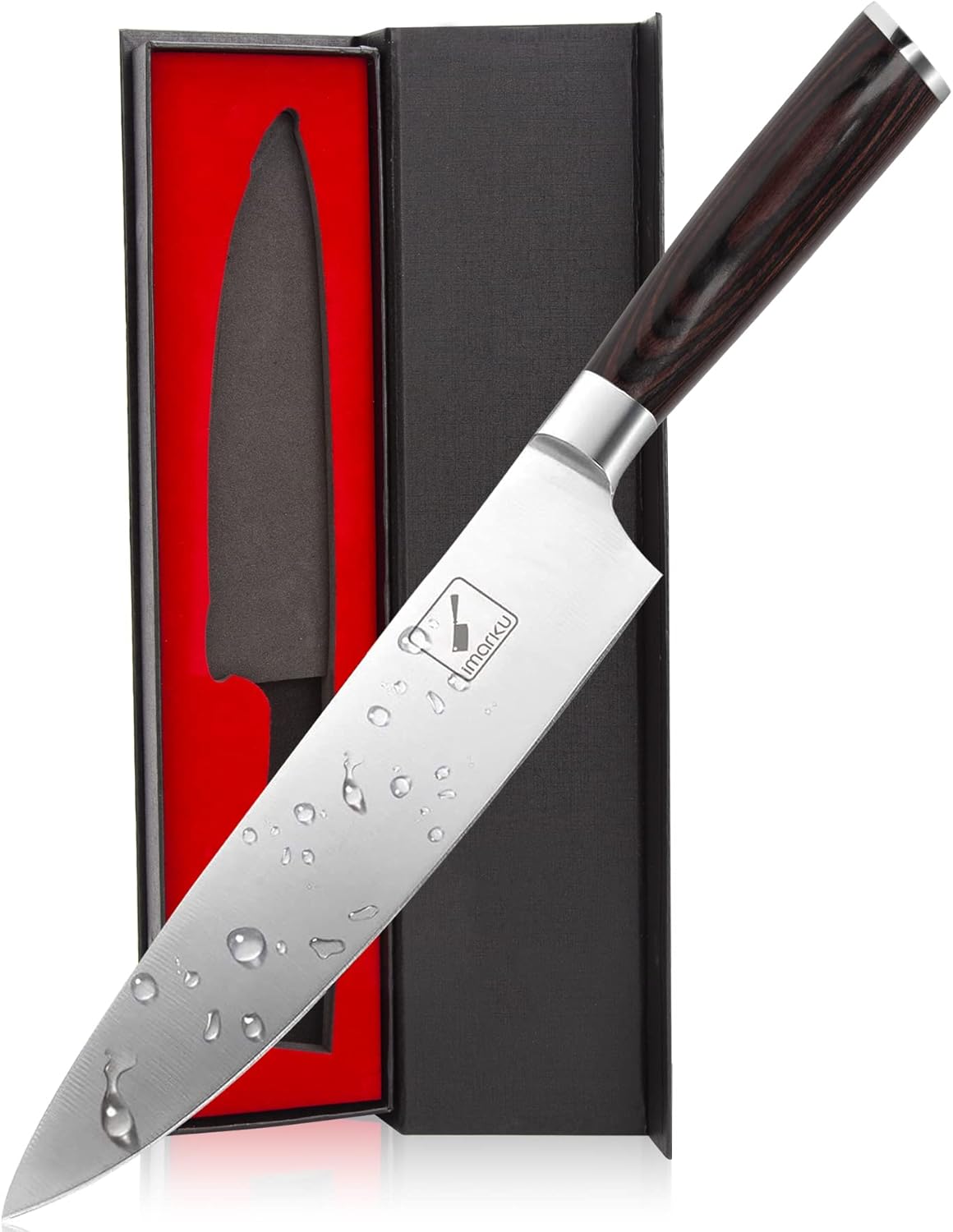
Built specifically for precision and endurance through demanding culinary applications, this gyutou knife delivers professional-grade performance ideal for serious home cooks and professional chefs alike who refuse to compromise on quality. The blade is expertly crafted from high-carbon stainless steel containing 0.6 to 0.75 percent carbon content, making it significantly harder and noticeably more durable than standard knives commonly found in its competitive class. With an impressive Rockwell hardness rating of 56 to 58, it strikes an excellent balance between superior edge retention and practical toughness, allowing it to handle demanding kitchen tasks with consistent confidence and reliable results.
Designed as a truly multi-functional knife capable of replacing multiple specialized tools, this gyutou excels at slicing, dicing, chopping, and cutting meat cleanly from bones with minimal waste. Its ultra-sharp edge, refined through advanced Japanese engineering techniques and traditional sharpening methods, ensures smooth, controlled cuts and maintains impressive sharpness even after repeated use on tougher ingredients including dense root vegetables and fibrous proteins.
Comfort receives equally high priority in this knife’s thoughtful design. The ergonomic Pakka handle is carefully engineered to effectively reduce hand fatigue, finger numbness, and wrist strain during extended preparation sessions spanning multiple dishes. Made with an FSC-certified wood frame sourced responsibly from Africa, the handle offers impressive strength, reliable stability, and a secure grip that remains comfortable even when hands become wet during busy cooking sessions.
Corrosion resistance is meaningfully enhanced by the inclusion of 16 to 18 percent chromium in the blade’s carefully balanced composition, helping protect against rust formation and wear accumulation over extended periods of regular use. Overall, this gyutou knife successfully combines exceptional sharpness, proven durability, and ergonomic comfort into a reliable kitchen tool designed to perform consistently and genuinely elevate everyday cooking experiences.
Whether preparing delicate vegetables, various proteins, or intricate garnishes requiring precision, it remains a dependable, well-balanced knife that actively supports efficiency, accuracy, and long-term culinary confidence in any kitchen environment from home setups to professional restaurant operations.
The Ultimate Guide to Kitchen Knives: Precision, Performance, and Culinary Excellence
Kitchen knives represent the most fundamental investment you can make in your culinary journey. Beyond the immediate improvement in cutting precision and meal preparation efficiency, quality knives offer the control and versatility that inferior alternatives simply cannot replicate. With countless options saturating the market from budget stamped blades to premium hand-forged masterpieces, finding the perfect balance between sharpness, durability, and value requires careful consideration. This comprehensive guide explores everything you need to know about kitchen knives, helping you navigate the options to discover the ideal tools for your cooking style, skill level, and budget constraints.
Understanding Different Types of Kitchen Knives
Not all kitchen knives deliver the same functionality, performance, or culinary capabilities. Understanding the fundamental characteristics of each type helps ensure your knife collection aligns perfectly with your cooking needs and preparation techniques.
Chef’s Knife
The chef’s knife stands as the undisputed workhorse of any kitchen, typically ranging from eight to ten inches in length. This versatile blade handles approximately eighty percent of kitchen cutting tasks, from chopping vegetables and mincing herbs to slicing meats and crushing garlic. The curved blade profile allows for efficient rocking motion during mincing, while the pointed tip provides precision for detailed work. Quality chef’s knives typically range from thirty to three hundred dollars depending on materials, construction methods, and brand reputation. The weight distribution between blade and handle affects handling characteristics, with well-balanced knives reducing fatigue during extended preparation sessions. Professional chefs often own multiple chef’s knives for different applications, though home cooks achieve excellent results with a single high-quality eight-inch model that becomes an extension of their hand through regular use.
Paring Knife
Paring knives feature short blades typically measuring three to four inches, designed specifically for precise tasks requiring detailed control. These compact knives excel at peeling fruits and vegetables, deveining shrimp, removing seeds, and creating decorative garnishes that larger knives handle awkwardly. The reduced blade length provides exceptional maneuverability for intricate work performed while holding ingredients in your hand rather than against cutting boards. Prices range from ten to eighty dollars for quality options, making paring knives accessible investments that dramatically expand your cutting capabilities. The straight blade edge differs from chef’s knife curves, optimized for controlled cuts rather than rocking motions. Many cooks find paring knives more comfortable for prolonged detailed work compared to attempting precise tasks with oversized chef’s knives that feel unwieldy during delicate operations.
Serrated Bread Knife
Serrated bread knives feature long blades with saw-like teeth designed specifically to cut through crusty exteriors without crushing soft interiors. These specialized knives typically measure eight to ten inches long, providing the length necessary for slicing large loaves in single smooth strokes. Beyond bread, serrated knives excel at cutting tomatoes, citrus fruits, cakes, and other foods where smooth blades tend to slip or crush. Quality serrated knives range from twenty to one hundred fifty dollars, representing relatively affordable additions to knife collections given their specialized utility. The serrations maintain effectiveness longer than straight edges since cutting action occurs at multiple points rather than along a single edge line, though sharpening requires specialized equipment or professional services rather than simple home sharpening methods. Professional bakers consider serrated knives absolutely essential, while home cooks appreciate their versatility for numerous tasks beyond breadmaking.
Essential Benefits of Investing in Quality Kitchen Knives
Superior Cutting Performance
Quality kitchen knives transform meal preparation through effortless cutting that requires minimal force. Sharp blades slice cleanly through ingredients rather than tearing or crushing, preserving food structure and appearance while reducing preparation time. This clean cutting proves particularly important when working with delicate ingredients including tomatoes, herbs, and soft fruits where dull knives create messy results. The reduced force requirements also enhance safety since you maintain better control without applying excessive pressure that causes blades to slip unpredictably. Professional chefs report completing preparation tasks thirty to forty percent faster with properly sharpened quality knives compared to dull or inferior alternatives, time savings that accumulate significantly across busy service periods.
Enhanced Kitchen Safety
Contrary to intuitive assumptions, sharp knives prove substantially safer than dull alternatives. Dull blades require excessive force that increases likelihood of slipping and causing injuries when blades deflect off ingredient surfaces unexpectedly. Sharp knives cut precisely where directed using minimal pressure, allowing controlled movements that reduce accident risk. Quality construction also affects safety through proper blade balance that prevents awkward handling and secure handle designs that maintain grip even when wet. The confidence gained through using reliable knives allows you to focus on proper cutting techniques rather than compensating for tool inadequacies, further reducing injury potential through improved form and attention.
Long-term Value and Durability
While quality knives command higher initial prices, their superior materials and construction deliver better long-term value compared to frequently replacing cheap alternatives. Premium steel formulations resist wear, maintain edges longer, and sharpen more easily, providing decades of reliable service with proper maintenance. The improved performance also justifies costs through enhanced cooking experiences, reduced food waste from cleaner cuts, and time savings during meal preparation. Many professional chefs use the same high-quality knives throughout entire careers spanning thirty years or more, making the per-use cost remarkably low despite substantial initial investments. Collectible knives from respected manufacturers often appreciate in value over time, particularly limited editions and discontinued models that develop cult followings among enthusiasts.
Critical Factors to Consider Before Purchasing
Blade Material and Steel Quality
Blade steel dramatically affects knife performance, maintenance requirements, and longevity. High-carbon stainless steel combines excellent edge retention with reasonable rust resistance, representing the most popular choice for modern kitchen knives. The carbon content typically ranges from 0.5 to 1.2 percent, with higher percentages providing harder steel that holds edges longer but becomes more brittle and challenging to sharpen. Chromium content around 13 to 18 percent provides corrosion resistance, essential for kitchen environments with constant moisture exposure. Japanese steels often feature higher hardness ratings around 60 to 62 on the Rockwell scale compared to German steels around 56 to 58, creating harder edges that stay sharper longer but chip more easily if misused. Premium Damascus steel features multiple layers creating distinctive patterns while combining different steel properties, though the aesthetic patterns provide no functional advantages beyond standard high-quality steel formulations.
Handle Design and Ergonomics
Handle design dramatically impacts comfort, control, and fatigue during extended use. Traditional wood handles offer natural beauty and comfortable grip characteristics, though they require more maintenance and eventually deteriorate from moisture exposure. Modern synthetic materials including Pakkawood and various polymers provide excellent durability with minimal maintenance while offering ergonomic shaping impossible with natural materials. The handle shape should accommodate your grip style, with western knives typically featuring larger handles suited for full-grip techniques while Japanese knives often feature more compact handles optimized for pinch grips. Weight balance between blade and handle affects handling characteristics, with forward-weighted designs providing momentum for chopping while neutral balance offers better control for detailed work. Testing knives before purchasing reveals personal preferences impossible to determine from specifications alone, making hands-on evaluation valuable whenever possible.
Construction Method and Quality
Manufacturing methods significantly impact knife performance and longevity. Forged knives are shaped from single pieces of steel using heat and pressure, creating dense blade structure with excellent balance and durability. The forging process typically includes bolsters that add weight, protect fingers, and improve balance, though modern designs sometimes omit bolsters for improved sharpening accessibility. Stamped knives are cut from steel sheets and ground to shape, resulting in lighter weight and lower costs compared to forged alternatives. While traditionally considered inferior, modern stamped knives using quality steel and proper heat treatment deliver excellent performance rivaling forged options. Full-tang construction extends the blade through the entire handle length, providing superior balance and durability compared to partial-tang designs where blades insert into handles. The handle attachment method affects longevity, with riveted construction offering maximum durability while hidden-tang designs provide seamless aesthetics that some cooks prefer despite slightly reduced durability.
Edge Geometry and Sharpening Angle
Blade edge geometry dramatically affects cutting performance and maintenance requirements. Western knives typically feature edge angles around 20 to 22 degrees per side, providing durability suitable for heavy-duty work including cutting through bones and frozen foods. Japanese knives often use sharper angles around 12 to 15 degrees per side, creating keener edges that slice effortlessly through ingredients but require more careful use to avoid damage. Single-bevel edges found on traditional Japanese knives provide exceptional sharpness for specific tasks but require specialized sharpening techniques and proper orientation during use. The blade grind from spine to edge affects cutting performance, with convex grinds providing strength, hollow grinds reducing friction, and flat grinds offering versatile performance. Understanding your intended uses helps select appropriate edge geometry, with home cooks generally preferring moderate angles around 15 to 18 degrees that balance sharpness with practical durability.
Maintenance Strategies for Maximum Longevity
Proper Cutting Surface Selection
The cutting surface dramatically impacts knife edge longevity and performance retention. Wood cutting boards provide ideal surfaces that effectively absorb impact while remaining gentle on blade edges, with end-grain designs offering superior edge preservation through fibers that separate around blades rather than resisting. Quality wood boards require periodic mineral oil treatment to prevent drying and cracking, but properly maintained wooden surfaces last decades. Plastic cutting boards offer affordability and dishwasher safety, though harder plastic varieties accelerate edge dulling compared to wood alternatives. Avoid glass, ceramic, marble, and metal cutting surfaces that rapidly destroy blade edges through excessive hardness, requiring frequent sharpening that reduces knife lifespan. Maintaining separate cutting boards for different food categories prevents cross-contamination while distributing wear across multiple surfaces, extending board longevity alongside your knives.
Regular Sharpening and Honing
Maintaining sharp edges requires understanding the distinction between honing and sharpening. Honing using steel rods realigns existing edges that bend during use, restoring cutting performance without removing steel. Hone knives briefly before each use or after every few hours of heavy prep work, maintaining edges between proper sharpenings. Actual sharpening removes steel to create new edges, necessary every few months depending on usage frequency and cutting techniques. Whetstones provide traditional sharpening methods offering maximum control and edge quality, though requiring skill development through practice. Pull-through sharpeners offer convenience for home cooks, though they remove more steel than necessary and create inconsistent edge angles. Electric sharpeners provide quick results with minimal skill requirements, making them popular for busy home kitchens despite purists’ preferences for manual methods. Professional sharpening services cost ten to twenty dollars per knife, worthwhile for maintaining premium knives or when lacking time and equipment for home sharpening.
Cleaning and Storage Best Practices
Proper cleaning immediately after use prevents food acids and moisture from damaging blade steel. Hand wash knives using warm water and mild dish soap, avoiding abrasive scrubbers that scratch finishes. Never place quality knives in dishwashers where harsh detergents, high temperatures, and collisions with other items cause damage to both blades and handles. Dry knives thoroughly immediately after washing, preventing water spots on blades and moisture damage to handles, particularly those featuring natural wood construction. Storage methods dramatically affect knife safety and edge preservation. Knife blocks protect edges while keeping knives conveniently accessible, though blocks require sufficient slots for your collection and consume counter space. Magnetic knife strips mount to walls, providing space-efficient storage with easy access while displaying knives attractively. Drawer inserts protect edges while keeping knives out of sight, ideal for kitchens where counter space is limited. Never store loose knives in drawers where blades damage each other and create safety hazards during retrieval.
Making Your Final Decision
When selecting kitchen knives, prioritize versatility and quality over acquiring extensive collections of specialized tools that see minimal use. Most home cooks achieve excellent results with three essential knives including an eight-inch chef’s knife for primary cutting tasks, a three-inch paring knife for detailed work, and a serrated bread knife for crusty breads and delicate items. This foundational trio handles virtually all home cooking requirements, making additional knives optional rather than essential purchases. Invest most of your budget in an exceptional chef’s knife since this tool sees the heaviest use and most dramatically impacts daily cooking experiences.
Consider your cooking style when selecting specific knives. Home cooks preparing primarily vegetables and boneless proteins succeed with lighter Japanese-style knives featuring keen edges optimized for precision slicing. Those frequently working with whole chickens, bone-in cuts, and harder ingredients benefit from heavier western-style knives built to withstand more demanding applications. The size and weight you find comfortable depends on hand size and strength, making personal testing valuable before committing to expensive purchases. Many enthusiasts eventually own knives in both styles, selecting tools appropriate for specific tasks rather than using single knives for all applications.
The perfect kitchen knives balance technical specifications with practical considerations including your typical cooking applications, maintenance willingness, and budget realities. By understanding the differences between steel types, construction methods, and design philosophies, you’ll discover options that genuinely transform your cooking experience. Whether building your first knife collection or upgrading from entry-level tools to professional-grade equipment, this investment delivers daily satisfaction while expanding your culinary capabilities in ways impossible with inadequate cutting tools that frustrate rather than facilitate your cooking passion.