Searching for the Best Knife Sharpeners that combine professional-grade results with user-friendly operation for maintaining your kitchen blades? We understand the challenge of finding reliable sharpeners that perfectly balance effective edge restoration, consistent angle precision, and lasting durability across diverse knife types. Our comprehensive guide showcases top-rated knife sharpeners that transform dull blades into razor-sharp cutting tools, maintain proper edge geometry through countless sharpening sessions, and elevate your culinary experience without requiring professional skills or expensive equipment. Tired of sharpeners that create uneven edges, remove excessive metal, or fail to restore truly sharp cutting performance? Our expert recommendations feature only the finest knife sharpeners that deliver consistent results and reliability through years of regular blade maintenance. Ready to maintain your knives with the precision tools professionals trust and home cooks can master? Let’s explore these exceptional options that blend effective sharpening technology with practical everyday performance.
Contents
5. Dskiley Electric Knife Sharpener
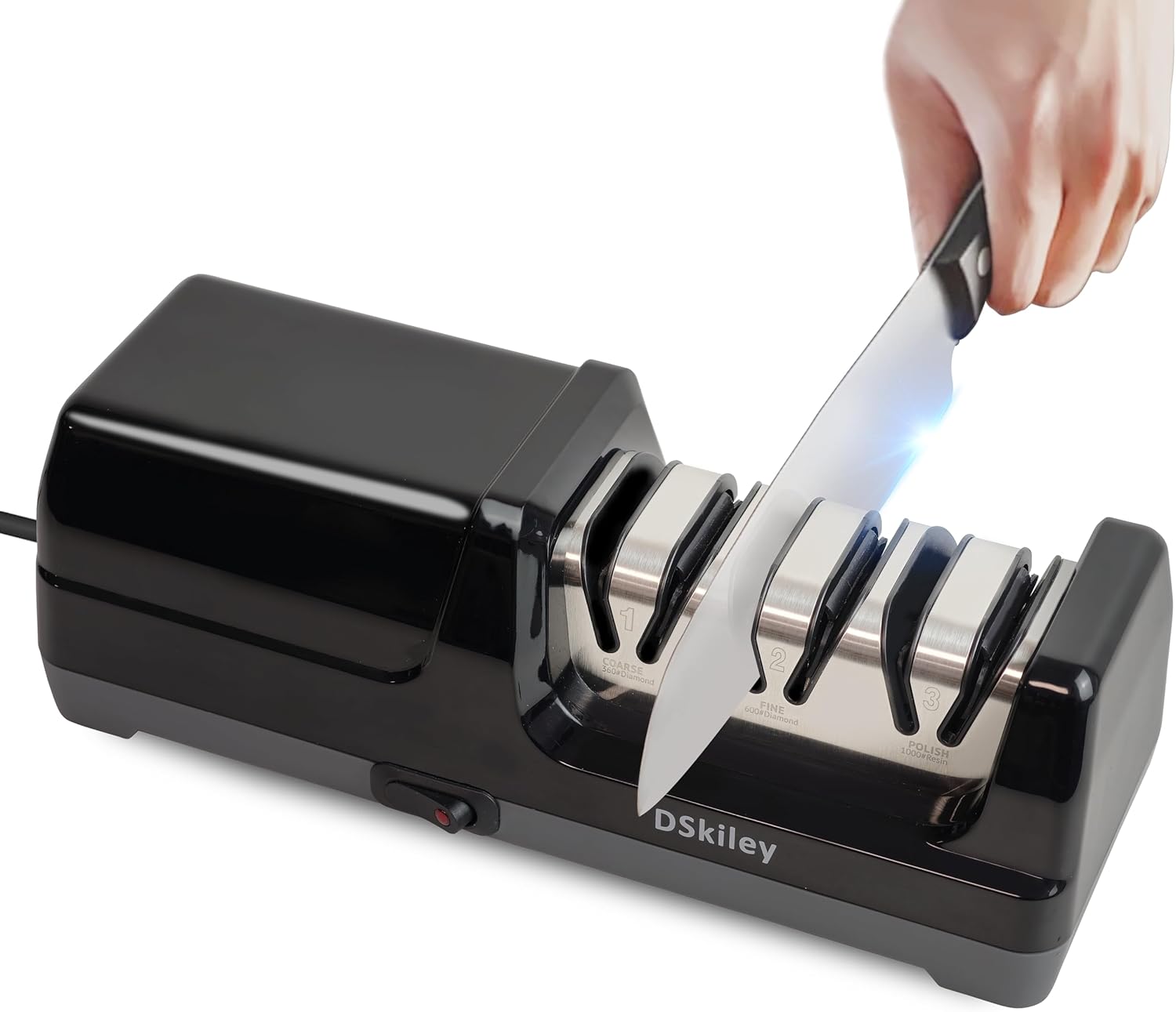
Tired of struggling with frustratingly dull knives when speed and precision matter most during crucial meal preparation? This electric knife sharpener is specifically built to bring worn blades back to life in just minutes rather than requiring lengthy manual sharpening sessions. Using a professional 3-stage diamond sharpening system, it efficiently repairs damaged edges, sharpens to razor precision, and polishes for a smooth, clean finish that transforms cutting performance. The impressive result is effortless slicing and dramatically improved control, especially valuable during busy cooking sessions and holiday meal preparation when time pressures mount.
What distinctly sets this sharpener apart from budget alternatives is its use of 100% diamond abrasive wheels rather than inferior materials that wear quickly. Unlike standard pull-through sharpeners that produce inconsistent results, diamond abrasives work faster, last substantially longer, and produce consistently cleaner edges that stay sharp through extended use. Whether you’re refreshing a lightly dulled blade or restoring a heavily worn knife that seems beyond saving, the performance remains reliably efficient and impressively consistent across diverse blade conditions.
A preset 20-degree precision angle guide removes all the guesswork typically associated with manual sharpening, delivering a chef-grade edge every single time without requiring developed skills or experience. It’s compatible with most straight-edge kitchen knives, including chef’s knives, santoku, slicing, and paring knives commonly found in home kitchens. Simply guide the blade smoothly through the appropriate stage and let the machine handle the technical work, ensuring consistent results regardless of your sharpening experience level.
Powered by a stable, high-performance motor, this sharpener maintains consistent speed without overheating or slowing down even during extended sharpening sessions involving multiple knives. Cleanup proves just as easy thanks to the thoughtfully designed built-in magnetic metal-shavings collector that captures debris during sharpening. Simply pull it out, empty the contents, rinse briefly, and you’re done with maintenance. For anyone genuinely serious about cooking, this sharpener represents a true kitchen essential that pays dividends through improved cutting performance and extended knife lifespan.
4. Tumbler Rolling Knife Sharpener

Sharp knives fundamentally change everything in the kitchen, and the Tumbler Rolling Knife Sharpener makes professional-level sharpening results genuinely achievable at home without specialized training. Designed specifically for precision and longevity, this innovative system helps protect your investment in quality knives by restoring a factory-sharp edge in just minutes rather than requiring time-consuming manual methods or expensive professional services.
At the technological core of the Tumbler lies a diamond-plated sharpening disc that delivers exceptional performance. Using D35 grit comparable to an 800-grit whetstone, it efficiently removes the worn outer layer of the blade to rebuild a clean, sharp edge without excessive material loss that shortens knife lifespan. Once the initial sharpening is complete, the proprietary stainless steel helix disc refines the edge by removing the burr, delivering noticeably smoother, more controlled cuts that feel dramatically better during actual cooking applications.
What truly distinguishes this sharpener from competing products is its remarkable simplicity and ease of use. Choose either a 15-degree or 20-degree angle depending on your blade type and intended applications, secure it firmly with the magnetic holder, and roll the disc back and forth in smooth motions. The powerful magnets maintain a consistent angle across the entire edge length, effectively eliminating guesswork and preventing the uneven sharpening that plagues handheld methods. Flip the unit over to hone the refined edge, and you’re done with the complete process in minutes.
The Tumbler is compact, genuinely intuitive, and surprisingly effective, making it ideal for beginners just learning proper sharpening techniques and experienced cooks alike who value consistent results. Whether you’re slicing delicate vegetables, breaking down proteins, or maintaining premium knives that deserve careful treatment, this sharpener keeps your blades performing at their absolute best, saving substantial time, effort, and money in the long run for home kitchens, culinary students, and professionals who value consistency, safety, and dependable sharpening performance daily.
3. Sharp Pebble Knife Sharpener

Achieving a genuinely razor-sharp edge at home no longer requires guesswork or professional training that takes years to develop. This adjustable angle knife sharpener is thoughtfully designed to deliver consistent, precision results by guiding your blade through the correct sharpening angle every single time without variation. With five preset angles including 12°, 15°, 18°, 21°, and 24°, it accommodates an impressively wide range of blades, from delicate kitchen knives requiring acute angles to rugged outdoor tools needing more durable edge geometry.
The handheld design is ergonomic and genuinely intuitive, making it readily accessible for beginners while still satisfying experienced users who appreciate precise control. Sharpening is straightforward and stress-free: place the blade into the appropriate slot corresponding to your desired angle and gently pull it through a few times to restore a clean, sharp edge quickly and safely. No complicated setup procedures or extra accessories are required, making this an immediately usable solution right from the package.
Versatility represents a key strength of this sharpener that justifies its position in this top-tier list. It functions effectively as a kitchen knife sharpener, pocket knife sharpener, and hunting knife sharpener, making it a single comprehensive solution for all your cutting tools rather than requiring multiple specialized devices. Built with high-quality materials, the sharpening components are carefully engineered for durability and reliable performance, delivering professional-level sharpness in just minutes without the learning curve associated with traditional whetstones.
Crafted from premium ABS plastic, the body is strong, lightweight, and specifically designed for long-term use rather than disposable performance. This is not a temporary tool but a dependable sharpening system built to last through countless sharpening sessions. Whether you cook daily and need frequent blade maintenance or head outdoors regularly and depend on sharp knives for field work, this sharpener keeps every blade ready for action and performing at peak capability.
2. Narcissus Knife Sharpener

The QN-M866 Electric Knife Sharpener brings professional-level sharpening results straight into your kitchen without requiring specialized skills or expensive professional services. Perfect for home use, it’s noticeably faster and more convenient than traditional manual sharpeners, making it easy to keep your knives razor-sharp without the physical effort or time commitment. Compatible with a variety of straight-blade knives including chef knives, slicing knives, and santoku knives commonly found in home kitchens, this sharpener ensures your favorite kitchen tools perform like new even after extended use.
Featuring a 2-stage sharpening system that addresses different blade conditions, it handles both crude and fine sharpening with impressive precision. The first stage quickly restores dull edges that have lost cutting effectiveness through regular use, while the second stage polishes and refines your blades, leaving a smooth, burr-free finish that feels noticeably cleaner during cutting. A magnetic dust collection box positioned at the bottom collects knife chips and metal particles, keeping your countertop clean during use and simplifying cleanup afterward.
Sharpening is quick and remarkably simple even for first-time users: just insert your knife at the correct angle, keeping it in contact with the outer wall for proper positioning, and pull it through 2 to 5 times per slot depending on blade condition. In just seconds, even old or worn knives that seemed permanently dull regain like-new sharpness that transforms cutting performance immediately.
Powered by a 30-watt DC motor specifically selected for optimal performance, the sharpener runs smoothly and continuously for over an hour without overheating or experiencing performance degradation. Its wide 100 to 240V voltage range makes it suitable for use anywhere in the world, perfect for international households or those who travel frequently. Beyond knives, this 3-in-1 multifunctional device includes a scissors slot, expanding its utility in the kitchen and providing additional value. With clear instructions and a short learning curve, the QN-M866 makes maintaining sharp, professional-quality blades easier than ever before.
1. Longzon 4-in-1 Knife Sharpener

The Longzon 4-Stage Manual Knife Sharpener brings precision and convenience to your kitchen like never before through a thoughtfully engineered design. Designed to handle a wide variety of blades, from stainless and hard steel knives to pocket knives, large knives, and even scissors, this sharpener is truly versatile and eliminates the need for multiple specialized sharpening devices. Each of the four distinct sharpening stages is carefully engineered to deliver the perfect edge appropriate for specific blade conditions, restoring dull blades to professional-level sharpness in seconds rather than requiring lengthy manual sharpening sessions.
Safety is a major focus with Longzon, addressing concerns that prevent many home cooks from attempting blade maintenance. The sharpener features a non-slip base that keeps it stable during use, preventing the dangerous movement that occurs with inferior sharpeners, and it comes with a cut-resistant glove for added protection during handling. This means you can sharpen your knives confidently without worrying about accidents or injuries, making it ideal for both beginners just learning proper technique and experienced cooks who appreciate reliable safety features.
Ease of use represents another standout feature that justifies this product’s top position. The intuitive design allows you to simply place your blade in the appropriate notch and glide it through a few times with smooth motions—no complicated steps or extra tools needed. In moments, your knives will be razor-sharp and ready for any task, from delicate vegetable preparation to breaking down proteins.
Beyond performance, the Longzon sharpener looks great on any countertop, complementing modern kitchen aesthetics. Its sleek, compact design not only saves valuable counter space but also adds a touch of sophistication to your kitchen environment. Functional, safe, and stylish, this sharpener keeps your blades in top condition while maintaining an organized and attractive cooking environment that you’ll be proud to show guests.
The Ultimate Guide to Knife Sharpeners: Maintaining Professional Edges at Home
Knife sharpeners represent essential tools for maintaining the cutting performance that separates frustrating meal preparation from efficient, enjoyable cooking experiences. Beyond the immediate improvement in blade sharpness, quality sharpeners preserve your knife investments by properly maintaining edge geometry and removing minimal material during each sharpening session. With countless options flooding the market from simple pull-through devices to sophisticated electric systems and traditional whetstones, finding the perfect balance between effectiveness, ease of use, and value requires understanding fundamental sharpening principles. This comprehensive guide explores everything you need to know about knife sharpeners, helping you navigate the options to discover the ideal maintenance tools for your knife collection, skill level, and usage patterns.
Understanding Different Types of Knife Sharpeners
Not all knife sharpeners deliver the same results, user experience, or long-term value. Understanding the fundamental characteristics of each category helps ensure your sharpening investment aligns perfectly with your knife maintenance needs and practical abilities.
Electric Knife Sharpeners
Electric sharpeners offer the fastest, most convenient sharpening method available for home use, typically completing edge restoration in thirty to sixty seconds per knife. These motorized devices feature rotating abrasive wheels or belts that reshape blade edges as you draw knives through preset angle guides. Quality electric sharpeners typically range from fifty to two hundred dollars, with premium models offering multiple stages for coarse sharpening, fine honing, and polishing. The preset angle guides eliminate guesswork, ensuring consistent results regardless of your sharpening experience or hand steadiness. Modern electric sharpeners accommodate various blade types and angles, making them versatile additions to kitchens containing diverse knife collections. The speed and consistency make electric sharpeners particularly valuable for busy households, professional kitchens requiring frequent blade maintenance, or cooks lacking time or interest in developing manual sharpening skills. However, electric sharpeners remove more metal per session compared to careful manual methods, potentially shortening knife lifespan over decades of use, though this concern proves negligible for most home cooks who rarely own knives long enough for this to matter.
Manual Pull-Through Sharpeners
Manual pull-through sharpeners provide middle-ground solutions balancing convenience with control, typically priced between fifteen and sixty dollars. These compact devices feature fixed abrasive slots set at predetermined angles, allowing you to restore edges by drawing blades through the slots several times. The simplicity makes them accessible to complete beginners, while the manual control allows you to adjust pressure and speed based on blade condition. Quality manual sharpeners incorporate multiple stages using progressively finer abrasives, mimicking professional sharpening processes in simplified form. The compact size makes them ideal for small kitchens, RVs, camping, or anywhere space limitations prevent storing larger electric models. Manual sharpeners generally remove less metal than electric alternatives, extending theoretical knife lifespan, though the practical difference remains minimal for typical home use patterns. The main disadvantage involves less consistent results compared to electric models, as human inconsistency in pressure and speed affects edge quality, though most users achieve satisfactory results with minimal practice.
Sharpening Stones and Whetstones
Sharpening stones represent traditional methods offering maximum control and minimal material removal, favored by professional chefs, knife enthusiasts, and those maintaining premium knife collections. Quality whetstones range from twenty to over two hundred dollars depending on size, grit, and origin, with Japanese water stones commanding premium prices. The manual process requires developing proper technique through practice, including maintaining consistent angles, applying appropriate pressure, and recognizing when edges reach optimal sharpness. This learning curve intimidates many home cooks, though countless online tutorials make skill development more accessible than ever. Whetstones offer unmatched versatility, accommodating any blade angle, knife size, or edge geometry without restrictions imposed by preset guides. The meditative process appeals to many enthusiasts who appreciate the hands-on connection with their tools, while the minimal material removal theoretically extends knife lifespan indefinitely. However, the time investment—typically ten to thirty minutes per knife for beginners—makes whetstones impractical for busy households requiring frequent sharpening across multiple knives. Serious cooks often maintain both whetstones for occasional comprehensive sharpening and convenient electric or pull-through sharpeners for quick touch-ups between major sessions.
Essential Benefits of Regular Knife Sharpening
Enhanced Cutting Safety
Sharp knives dramatically improve kitchen safety contrary to intuitive assumptions that associate sharpness with danger. Dull blades require excessive force that increases likelihood of slipping and causing injuries when blades deflect unpredictably off ingredient surfaces. Sharp edges cut precisely where intended using minimal pressure, allowing controlled movements that reduce accident risk substantially. The improved cutting efficiency also reduces repetitive stress injuries caused by sawing motions required to cut with dull blades. Professional kitchen studies demonstrate lower injury rates in facilities maintaining rigorous knife sharpening schedules compared to those allowing blade degradation. The confidence gained through using properly sharpened knives allows you to focus on proper cutting techniques rather than compensating for tool inadequacies, further reducing injury potential through improved form and attention.
Improved Cooking Efficiency
Sharp knives transform meal preparation speed through effortless cutting that eliminates the frustrating resistance encountered with dull blades. Professional chefs report completing prep work thirty to fifty percent faster with properly maintained knives compared to working with degraded edges. This time savings accumulates significantly across regular cooking, recovering the time invested in sharpening many times over. The clean cuts also reduce ingredient waste since sharp blades slice precisely without crushing or tearing that creates unusable trimmings. For home cooks preparing daily meals, the cumulative time savings across years justifies sharpening investments many times over, while the improved efficiency makes cooking more enjoyable and less exhausting after long work days.
Extended Knife Lifespan
Regular proper sharpening actually extends knife lifespan compared to allowing blades to deteriorate severely before attempting restoration. Severely dulled edges require aggressive material removal to rebuild proper geometry, while regular light maintenance removes minimal steel while maintaining optimal performance. The improved cutting efficiency also reduces physical stress on blades, handles, and joints that accelerates wear when excessive force becomes necessary. Quality knives maintained through regular sharpening can provide decades of reliable service, while neglected blades often develop chips, cracks, or handle failures requiring premature replacement. The investment in quality sharpening equipment pays dividends through extended knife lifespan and maintained cutting performance that preserves the joy of cooking with excellent tools.
Critical Factors to Consider Before Purchasing
Sharpening Angle Compatibility
Different knife styles require specific sharpening angles for optimal performance and durability. Western knives typically feature 20-degree angles per side, while Japanese knives often use sharper 15-degree angles. Quality sharpeners accommodate multiple angles through adjustable guides or multiple preset slots, ensuring compatibility with diverse knife collections. Single-angle sharpeners prove adequate for households maintaining uniform knife styles but limit flexibility for those owning varied collections or planning future knife acquisitions. Adjustable angle systems offer maximum versatility though sometimes at the cost of convenience and consistency compared to fixed-angle alternatives. Understanding your current and future knife collection composition guides appropriate sharpener selection, preventing compatibility issues that limit sharpening effectiveness.
Abrasive Material Quality
The abrasive material dramatically affects sharpening speed, edge quality, and long-term durability. Diamond abrasives provide the hardest, fastest-cutting option, efficiently sharpening even difficult steels while resisting wear that degrades ceramic and carbide alternatives. Ceramic abrasives offer gentler sharpening producing refined edges, though they cut slower and potentially chip when encountering harder blade steels. Carbide abrasives sharpen quickly but produce rougher edges requiring additional polishing stages for optimal results. Premium sharpeners often incorporate multiple abrasive types across different stages, using coarser materials for initial edge restoration and finer abrasives for final polishing. The abrasive quality affects both immediate performance and long-term value, as cheaper materials degrade quickly, requiring sharpener replacement while quality abrasives maintain effectiveness through thousands of sharpening sessions.
Number of Sharpening Stages
Multi-stage sharpeners produce superior edges compared to single-stage alternatives, though they require additional time and effort. Two-stage systems typically include coarse sharpening for edge restoration and fine honing for polishing, providing adequate results for most home cooking applications. Three-stage systems add intermediate grits, producing smoother transitions and refined edges appreciated by experienced cooks. Four or more stages offer ultimate edge refinement though with diminishing returns for typical home use. Single-stage sharpeners provide convenience for quick touch-ups but cannot restore severely damaged edges or produce truly refined results. Your intended usage patterns guide appropriate stage selection, with occasional home cooks succeeding with two-stage systems while serious enthusiasts and professionals benefiting from three or more stages producing competition-worthy edges.
Ease of Use and Learning Curve
The sharpening learning curve varies dramatically between sharpener types, affecting practical utility regardless of theoretical performance capabilities. Electric sharpeners with preset guides require virtually no skill, allowing anyone to achieve acceptable results immediately. Manual pull-through sharpeners require minimal technique development, typically producing satisfactory results after several practice sessions. Adjustable angle systems require understanding proper angle selection and consistent technique but remain accessible to motivated beginners. Whetstones demand substantial skill development, with most users requiring weeks or months of practice before achieving results matching simpler sharpener types. Honestly assessing your patience for skill development, available practice time, and interest in traditional methods guides appropriate sharpener selection. Many enthusiasts eventually own multiple sharpener types, using convenient options for routine maintenance and more sophisticated methods for occasional comprehensive sharpening when time and motivation align.
Maintenance Strategies for Optimal Sharpening Results
Proper Sharpening Frequency
Sharpening frequency depends on knife usage patterns, blade steel quality, cutting surface types, and personal sharpness standards. Professional kitchens typically sharpen daily or every few days given intensive use, while home cooks generally succeed with weekly or biweekly sharpening depending on cooking frequency. The key involves sharpening before edges deteriorate severely, as minor dulling requires minimal material removal while severely degraded edges demand aggressive restoration. Light honing between proper sharpenings extends intervals, with many cooks honing daily while fully sharpening monthly. Developing sensitivity to blade sharpness through regular use allows you to recognize when sharpening becomes necessary, typically evident through increased cutting resistance, tendency to slip on ingredient surfaces, or crushing rather than slicing through delicate items like tomatoes.
Cleaning and Maintaining Sharpeners
Sharpeners require regular cleaning to maintain effectiveness and prevent metal particle accumulation that degrades performance. Electric sharpeners with collection chambers need emptying after every few uses, with periodic disassembly for thorough cleaning removing embedded particles. Manual pull-through sharpeners benefit from occasional cleaning with compressed air or soft brushes removing accumulated metal dust. Whetstones require cleaning after each use, with most types needing water rinsing and thorough drying before storage. Some water stones develop surface glazing requiring periodic flattening using dedicated flattening stones or coarse sandpaper to restore cutting effectiveness. Proper maintenance extends sharpener lifespan substantially while ensuring consistent performance across years of regular use.
Testing Blade Sharpness
Developing reliable methods for assessing blade sharpness helps you recognize when sharpening becomes necessary and confirm sharpening effectiveness. The paper test involves attempting to slice through paper held unsupported, with properly sharpened knives cutting cleanly while dull blades tear or fail to cut. The tomato test evaluates whether blades slice through tomato skin using only blade weight without sawing motion, indicating functional sharpness for most cooking applications. Visual inspection under bright light reveals edge condition, with properly sharpened edges appearing as fine lines rather than visible flat spots indicating dullness. The fingernail test involves gently touching the edge to your thumbnail at shallow angles, with sharp edges catching immediately while dull blades slide without gripping. Regular testing builds intuition about sharpness levels and maintenance timing, allowing you to maintain optimal cutting performance through proactive sharpening rather than waiting for obvious degradation.
Making Your Final Decision
When selecting knife sharpeners, prioritize ease of use and consistency over theoretical maximum performance, as sharpeners you’ll actually use regularly provide more value than sophisticated systems that remain in cabinets due to complexity or time requirements. Beginners benefit most from quality electric or manual pull-through sharpeners offering preset angles and foolproof operation, building confidence and establishing regular maintenance habits. Intermediate users ready to develop skills should consider adjustable manual systems or coarse whetstones, gaining control and versatility while remaining accessible. Advanced users and enthusiasts justify complete whetstone sets producing ultimate edges, though they should maintain convenient backup sharpeners for quick routine maintenance.
Consider your knife collection composition when choosing sharpeners. Households maintaining primarily western-style knives succeed with 20-degree sharpeners, while those owning Japanese knives require 15-degree capability. Mixed collections necessitate adjustable or multi-angle systems despite added complexity and cost. The frequency of use and number of knives requiring maintenance also guides selection, with large collections or heavy users benefiting from fast electric systems while occasional cooks succeed with simple manual alternatives.
The perfect knife sharpener balances technical capabilities with practical considerations including your skill level, available time, storage space, and budget realities. By understanding the differences between sharpener types and honestly assessing your maintenance commitment, you’ll discover options that genuinely transform your cooking experience through consistently sharp knives. Whether seeking convenient electric sharpening for busy households or traditional whetstones for ultimate control, this investment delivers daily satisfaction while protecting your knife investments and making every cutting task safer, faster, and more enjoyable than working with degraded blades that frustrate rather than facilitate your culinary passion.